
Call Center

+91 702 579 0257

CT scan

CT scan

Overview

A CT scan (Computed Tomography scan) is an advanced imaging test that uses X-rays and computer technology to create detailed cross-sectional images of the body. It provides clearer and more precise images than a regular X-ray, helping doctors examine organs, bones, blood vessels, and soft tissues. CT scans are commonly used to detect injuries, infections, tumors, internal bleeding, and other medical conditions. The procedure is quick, painless, and may sometimes involve the use of a contrast dye to enhance image clarity.

Ideal For

A CT scan is ideal for detecting head injuries, brain disorders, chest and lung conditions, tumors, internal bleeding, abdominal pain, bone fractures, and joint problems, as well as for guiding biopsies and other diagnostic or interventional procedures.

Pre-Requisite

The procedure is safe and convenient:

• Fasting for 4–6 hours may be required if contrast dye is used.
• Remove metal objects such as jewelry before the scan.
• Inform the doctor about allergies, pregnancy, or kidney problems.
• Carry previous scan reports for better comparison and evaluation.

Reports are typically available within the specified turnaround time for timely medical consultation.

Process

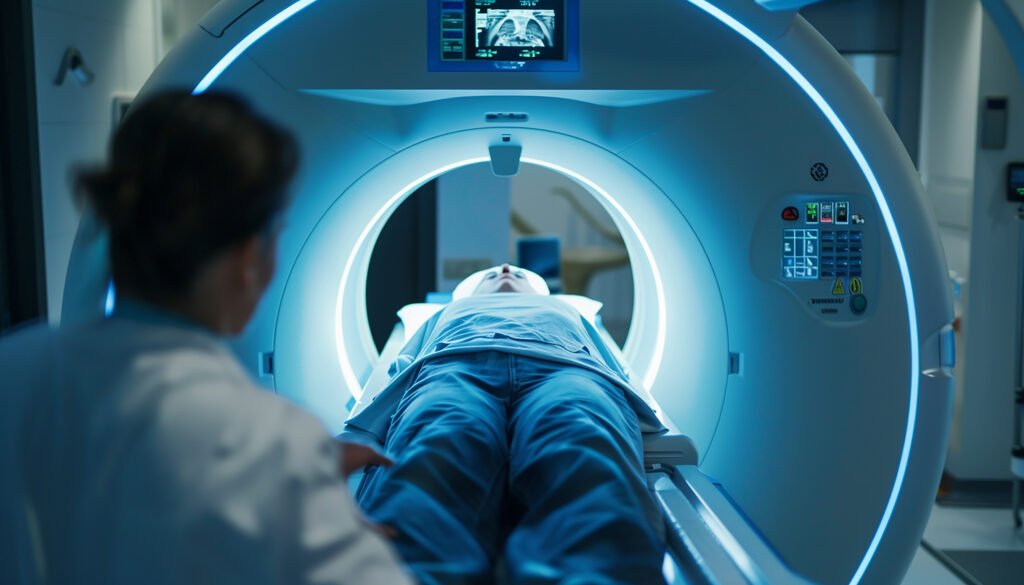
During a CT scan, the patient lies on a motorized table that slowly moves through a circular scanning machine. The scanner takes multiple X-ray images from different angles, which are then processed by a computer to create detailed cross-sectional images of the body. The procedure is quick and painless, and in some cases, a contrast dye may be given to enhance image clarity.

Popular Health Packages

When and Why CT Scan is Prescribed?

A CT scan is prescribed when detailed internal images are needed to diagnose conditions that cannot be clearly seen on a regular X-ray or ultrasound. Doctors recommend it to detect injuries after accidents, evaluate severe headaches or stroke symptoms, identify tumors or infections, investigate chest or abdominal pain, assess internal bleeding, and monitor treatment progress in various medical conditions.

Things You Should Know

• A CT scan is quick, painless, and usually completed within 10–30 minutes.
• You must remain still during the scan for clear images.
• Contrast dye may be used in some cases to improve image detail.
• Inform your doctor if you are pregnant or allergic to contrast dye.
• CT scans involve a small amount of radiation, but they are generally considered safe when medically necessary.

Frequently Asked Questions

A CT scan uses a controlled and medically approved level of radiation, and the benefits of accurate diagnosis usually outweigh the minimal risk.
The scan itself is painless, but if contrast dye is used, you may feel a brief warm sensation or metallic taste.
It is not usually necessary, but if you are anxious or receiving contrast dye, having someone with you can be helpful.
Patients taking certain diabetes medications, especially metformin, may need special instructions if contrast dye is used.
Yes, CT scans can be performed in children when medically required, with adjusted radiation doses for safety.

Filters

Test Type

Health condition

Gender

Age Group

Filters

Package Type

Health condition

Gender

Age Group