
Home » Scans & Imaging » Electrocardiogram (ECG)
Home » Scans & Imaging » Electrocardiogram (ECG)
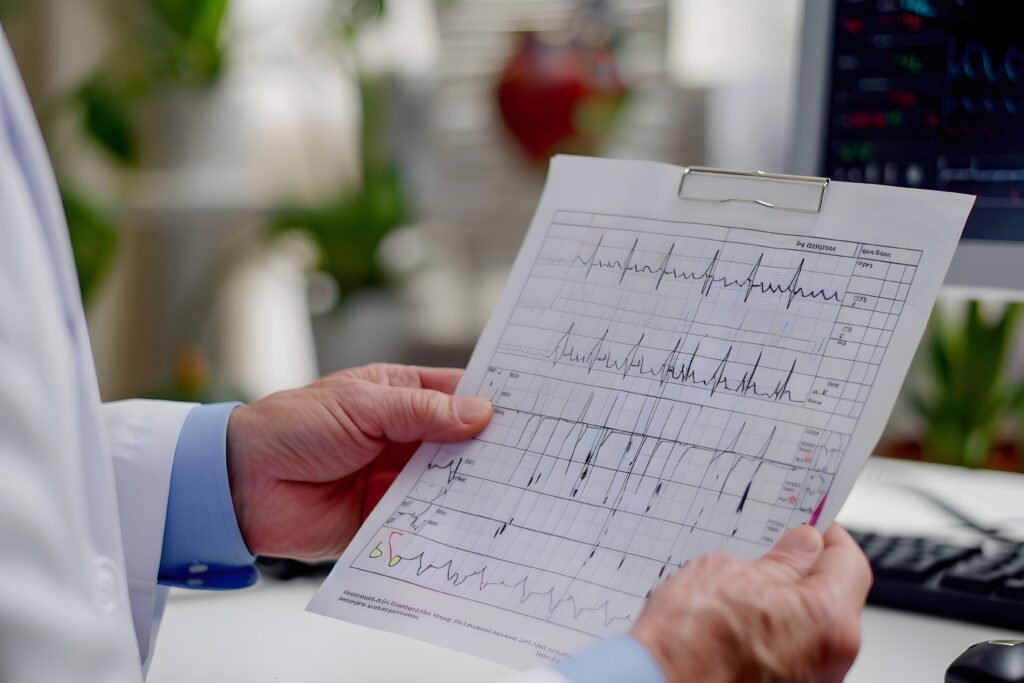
Before undergoing an ECG, it is important to follow a few simple instructions to ensure accurate results:
No fasting is usually required unless advised by your doctor.
Wear comfortable clothing that allows easy access to the chest, arms, and legs.
Avoid applying lotions, oils, or creams on the chest area on the day of the test.
Inform the healthcare provider about any heart conditions, pacemakers, or ongoing medications.
Stay relaxed and avoid strenuous physical activity just before the test for accurate readings.
An ECG is a quick and painless procedure performed by a trained technician. The patient is asked to lie down comfortably on an examination table. Small adhesive electrodes are attached to specific areas on the chest, arms, and legs. These electrodes are connected to an ECG machine, which records the electrical signals of the heart. The patient is required to remain still and breathe normally while the machine captures the readings. The entire procedure usually takes about 5–10 minutes, and the electrodes are removed immediately afterward. Patients can resume their normal activities right away.
An ECG is prescribed when a patient experiences symptoms that may indicate a heart-related issue, such as chest discomfort, irregular heartbeat, rapid pulse, shortness of breath, dizziness, or fainting spells. It is also recommended during routine health check-ups, before surgical procedures, or when monitoring known heart conditions. Doctors use an ECG to detect arrhythmias, signs of a previous or ongoing heart attack, heart enlargement, electrolyte imbalances, and other abnormalities in heart rhythm. It is a valuable first-line test for evaluating cardiac health and guiding further diagnostic or treatment decisions.
An ECG is a quick test that usually takes only 5–10 minutes.
It records the heart’s electrical activity and helps detect rhythm abnormalities.
The procedure is completely painless and non-invasive.
You will need to lie still during the recording for accurate results.
It does not use radiation and is safe for all age groups.
Inform your healthcare provider if you have a pacemaker or any implanted cardiac device.
The test may be repeated over time to monitor heart health or treatment progress.