
Home » Scans & Imaging » Echocardiogram
Home » Scans & Imaging » Echocardiogram
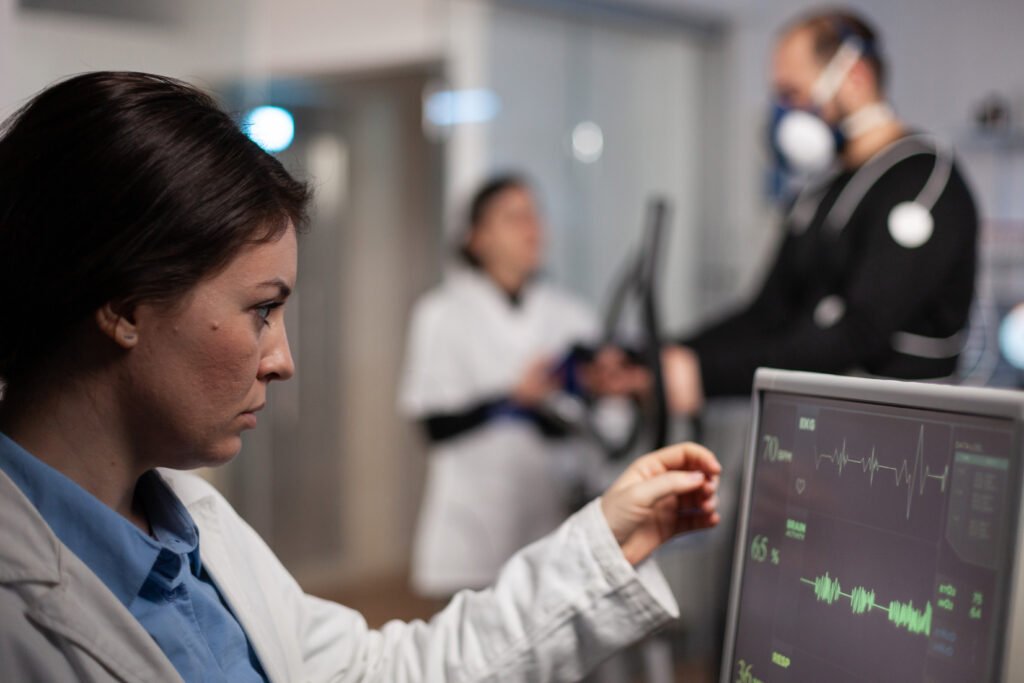
Before undergoing an echocardiogram, it is important to follow a few simple guidelines to ensure accurate results and a smooth testing experience.
No special preparation is usually required for a standard echocardiogram.
Wear comfortable, loose-fitting clothing on the day of the test.
Inform the doctor about any ongoing medications or existing heart conditions.
Avoid applying lotions, oils, or powders on the chest area before the procedure.
Carry previous medical records, ECG reports, or prescriptions for reference.
For certain specialized echocardiograms (such as stress or transesophageal echocardiography), additional instructions like fasting may be advised by your healthcare provider.
An echocardiogram is a simple and painless procedure performed by a trained technician or cardiologist. The patient is asked to lie down on an examination table, and a special gel is applied to the chest area to help transmit sound waves. A small handheld device called a transducer is gently moved over the chest to capture real-time images of the heart. These sound waves create detailed pictures of the heart’s structure and movement on a monitor. The procedure usually takes about 20–40 minutes, and patients can resume their normal activities immediately afterward.
An echocardiogram is prescribed when a patient shows symptoms that may indicate a heart problem, such as chest pain, shortness of breath, palpitations, swelling in the legs, dizziness, or unexplained fatigue. It is also recommended if there are abnormal findings in an ECG, chest X-ray, or physical examination. Doctors use this test to evaluate heart structure and function, assess heart valve disorders, detect congenital heart defects, monitor heart failure, and check the effectiveness of ongoing cardiac treatments. It plays a vital role in early diagnosis and guiding appropriate medical management.
An echocardiogram is a safe, non-invasive, and painless procedure.
It uses sound waves (not radiation) to create images of the heart.
The test usually takes about 20–40 minutes to complete.
No downtime is required, and you can return to normal activities immediately.
A special gel is applied to the chest to help obtain clear images.
Inform your doctor about any existing heart conditions or medications.
Additional preparation may be required for specialized types like stress or transesophageal echocardiograms.